

High heat at the nozzle: The OPTIMA STEAMER generates steam at around 178°C and delivers 135–137°C at the nozzle tip under ambient temperature and pressure.
Heats deep into oak: In a Lebrun Labs barrel study, the OPTIMA STEAMER heated oak to 80°C at a 5 mm depth, the temperature needed to kill spoilage yeasts hidden in the wood, in 23 minutes, while a hot water pressure washer reached only about 60°C at the same depth.
Lab-proven against wine spoilage yeasts: Lebrun Labs certificates of analysis show that OPTIMA STEAMER steam eliminated 100% of Brettanomyces dekkera and Zygosaccharomyces bailii on plastic, glass, and stainless steel surfaces.
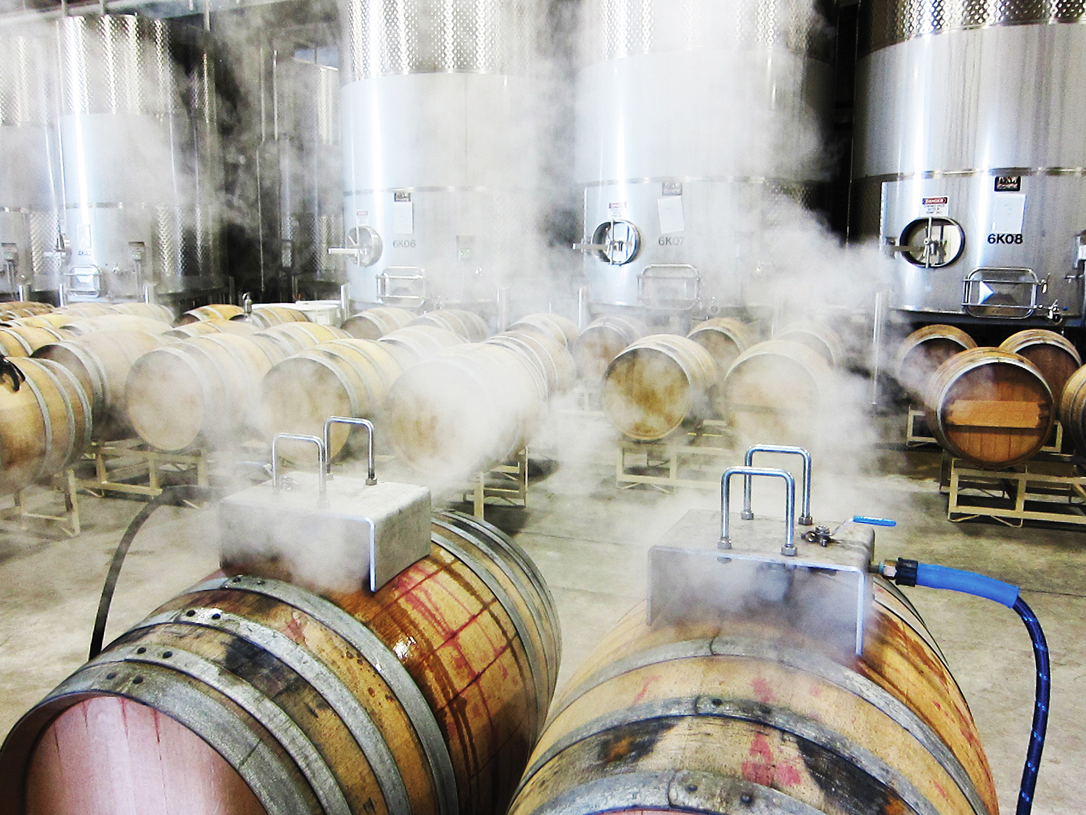
Sustainable and efficient: One OPTIMA STEAMER can sanitize two barrels at the same time while using far less water and energy than hot water washing, helping extend barrel life.
-
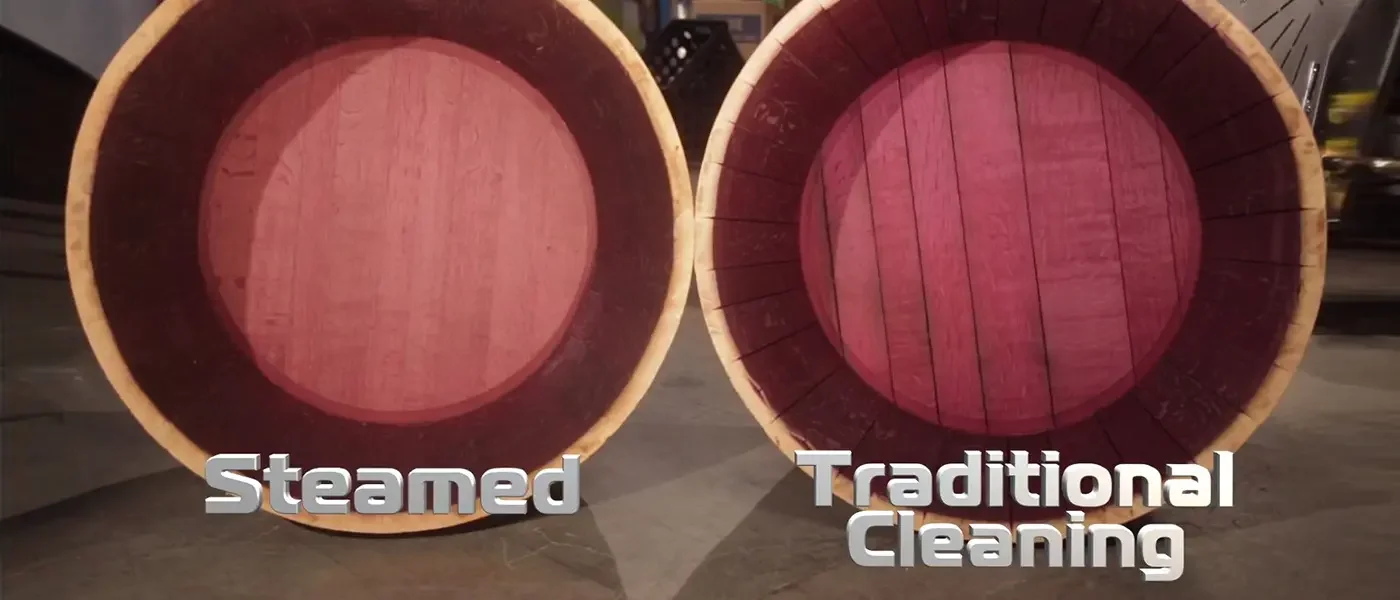
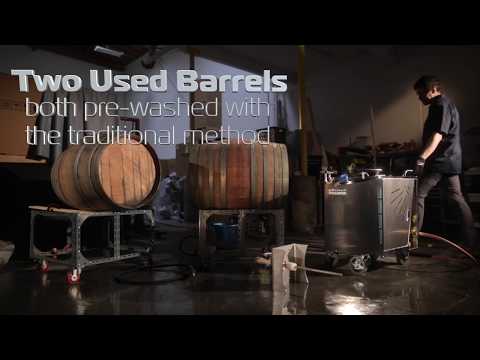 Optima Steamer Barrel Cleaning Before & After
-
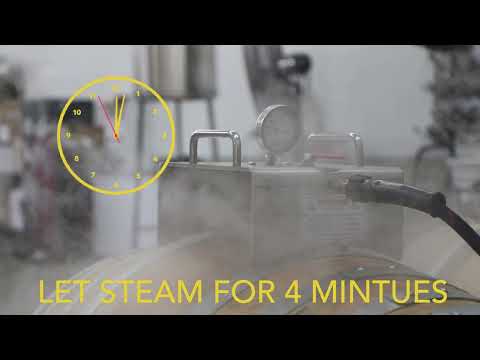 How to sanitize a barrel with an Optima Steamer (WIN Spotlight)
Steam is the superior method of barrel sanitation because superheated steam, as a gas, carries high heat deep into the wood's surface and pores and kills hidden yeast, mold, and bacteria naturally, without chemicals.
Oak barrels are porous, and spoilage microorganisms can survive inside the wood where surface cleaning cannot reach. The OPTIMA STEAMER generates steam at around 178°C and delivers 135–137°C at the nozzle tip under ambient temperature and pressure. When the steam is fed into a barrel or tank and the vessel is lightly pressurized, the temperature inside rises even higher in a relatively short time.
Steam heats oak far deeper than hot water: in a Lebrun Labs study, the OPTIMA STEAMER with a barrel tool heated oak to 80°C at a 5 mm depth in 23 minutes, the temperature and depth needed to kill spoilage yeasts hidden in barrel wood, while a hot water pressure washer reached only about 60°C.
Brettanomyces ("Brett") penetrates wooden barrels by acid hydrolysis, reaching as deep as 5 mm or more into the oak. Inside the wood, Brett lies dormant in empty barrels for years and then grows again in the next wine, where Brett metabolites spoil the wine even in high-alcohol, low-oxygen conditions. Wine spoilage microbes are not heat-tolerant and die at 80°C, so a barrel is properly sanitized only when the wood reaches 80°C at a 5 mm depth.
Criteria |
OPTIMA STEAMER with barrel tool |
Hot water pressure washer |
Heat delivered into the barrel |
110°C superheated steam at 5 psi |
About 80–82°C water (maximum safe setting) |
Temperature at 5 mm into oak |
80°C reached in 23 minutes |
About 60°C; 80°C not reached |
Reach into wood |
Gas travels around obstacles and into wood pores and stave gaps |
Liquid cannot reach many hidden areas inside the wood |
Residual water and operator time |
Very little residual water, removed by rotating the barrel |
At least 30 minutes to fill; drained by siphon only after the water cools, often an all-day process |
Water and chemical use |
Far less water; no chemicals |
Large volumes of heated water; often paired with chemical sanitizers |
OPTIMA STEAMER steam eliminated 100% of two major wine and beverage spoilage yeasts, Brettanomyces dekkera and Zygosaccharomyces bailii, in tests certified by Lebrun Labs, an independent testing laboratory in Anaheim, California.
Brettanomyces ("Brett") produces off-flavors in wine and beer and is notoriously hard to remove from oak barrels, and Zygosaccharomyces is a spoilage yeast that tolerates sugar and acid in wine and other beverages. Lebrun Labs tested both yeasts on three surfaces: polystyrene plastic, 16 oz glass tumblers, and restaurant-grade stainless steel. On every surface, untreated controls exceeded 10⁷ CFU/mL, while surfaces cleaned with the OPTIMA STEAMER showed zero detectable colonies, recorded as 100% elimination.
Spoilage yeast (ATCC No.) |
Plastic |
Glass |
Stainless steel |
Brettanomyces dekkera (52905) |
100% |
100% |
100% |
Zygosaccharomyces bailii (58445) |
100% |
100% |
100% |
These results were obtained under laboratory conditions, so wineries and breweries should confirm OPTIMA STEAMER performance within their own sanitation procedures, because steam exposure time, nozzle distance, and the condition of each barrel all affect results.
Download the full lab reports: The complete Lebrun Labs certificates of analysis are available on the SJE official website: [OPTIMA STEAMER Lab Tests]
Wineries sanitize barrels by feeding superheated steam into each barrel through an OPTIMA STEAMER barrel tool and lightly pressurizing the barrel, with up to two barrels at a time, and craft breweries use the same moist heat to sanitize and restore large wooden foeders.
Barrel sanitation in five steps:
1. Set up a stand-alone cleaning station: The OPTIMA STEAMER works as a stand-alone barrel cleaning station that can sanitize two barrels at the same time.
2. Insert the barrel tool: Our barrel tool directs superheated steam into the barrel so the steam penetrates the wood's surface and pores.
3. Lightly pressurize the barrel: The barrel tool raises the pressure inside the barrel (to about 5 psi in the Lebrun Labs study), which drives heat deep into the oak in a relatively short time.
4. Kill hidden microorganisms: Moisture and heat work together to kill yeast, mold, and bacteria hidden in the wood, without chemicals. In the Lebrun Labs study, the oak reached 80°C at a 5 mm depth after 23 minutes.
5. Rotate the barrel to drain: Only a small amount of water remains in the barrel, and rotating the barrel removes that water, so the barrel is ready much sooner than after a hot water fill.
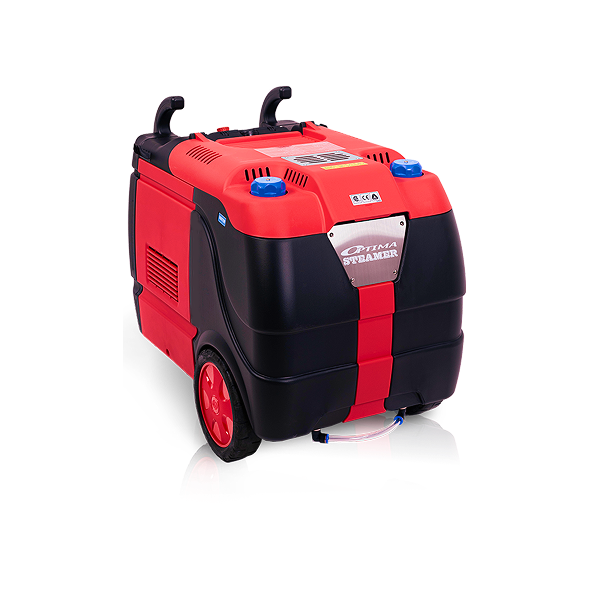
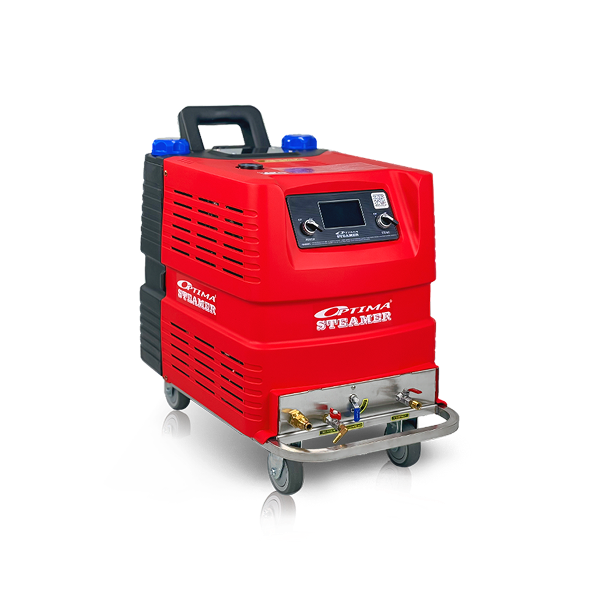
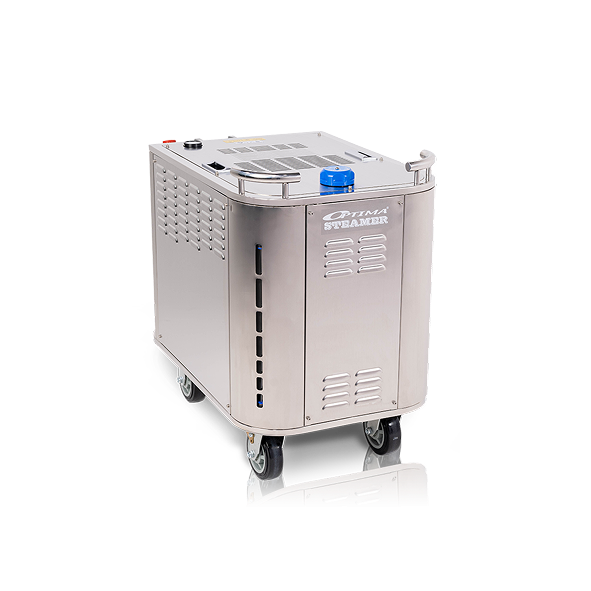
We recommend the OPTIMA XEm for small wineries and craft breweries, the OPTIMA XE for everyday barrel sanitation, and the OPTIMA SEII for high-output work such as large foeders and tanks.
Model |
Voltage |
Power Consumption |
Steam Flow Rate |
Best fit |
OPTIMA XEm |
3-Phase 200V ~ 600V |
10.5 kW |
250 ~ 500 cc/min |
Small wineries, craft breweries, tasting rooms |
OPTIMA XE |
3-Phase 200V ~ 600V |
12.2 / 18.2 / 27.2kW |
300 ~ 1,700 cc/min |
Everyday barrel sanitation, two-barrel cleaning stations |
OPTIMA SEII |
3-Phase 200V ~ 600V |
18.2 / 27.2 / 42.2kW |
300 ~ 1,900 cc/min |
Large foeders, tanks, high-volume cellars and breweries |